STORAGE STRUCTURE
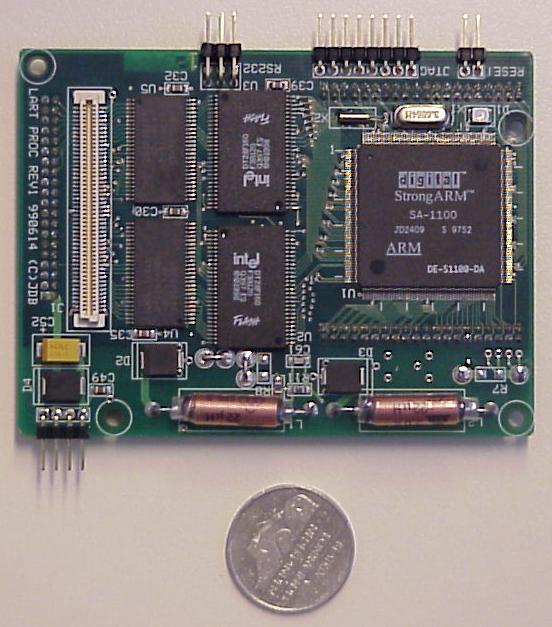
- The main memory of the computer is also known as RAM, standing for Random Access Memory. It is constructed from integrated circuits and needs to have electrical power in order to maintain its information. When power is lost, the information is lost too! It can be directly accessed by the CPU. The access time to read or write any particular byte are independent of whereabouts in the memory that byte is, and currently is approximately 50 nanoseconds (a thousand millionth of a second). This is broadly comparable with the speed at which the CPU will need to access data. Main memory is expensive compared to external memory so it has limited capacity. The capacity available for a given price is increasing all the time. For example many home Personal Computers now have a capacity of 16 megabytes (million bytes), while 64 megabytes is commonplace on commercial workstations. The CPU will normally transfer data to and from the main memory in groups of two, four or eight bytes, even if the operation it is undertaking only requires a single byte.
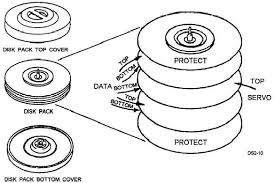
- Magnetic Disk a memory device, such as a floppy disk or a hard disk, that is covered with a magnetic coating. Digital information is stored on magnetic disks in the form of microscopically small, magnetized needles, each of which encodes a single bit of information by being polarized in one direction (representing 1) or the other (representing 0).

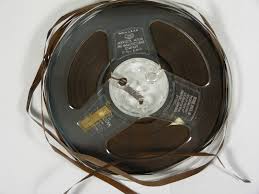
- Magnetic tape is a medium for magnetic recording generally consisting of a thin magnetizable coating on a long and narrow strip of plastic. Nearly all recording tape is of this type, whether used for recording audio or video or for computer data storage. It was originally developed in Germany, based on the concept of magnetic wire recording. Devices that record and playback audio and video using magnetic tape are generally called tape recorders and video tape recorders respectively. A device that stores computer data on magnetic tape can be called a tape drive, a tape unit, or a streamer.
Magnetic tape revolutionized the broadcast and recording industries. In an age when all radio (and later television) was live, it allowed programming to be prerecorded. In a time when gramophone records were recorded in one take, it allowed recordings to be created in multiple stages and easily mixed and edited with a minimal loss in quality between generations. It is also one of the key enabling technologies in the development of modern computers. Magnetic tape allowed massive amounts of data to be stored in computers for long periods of time and rapidly accessed when needed.
Today, many other technologies exist that can perform the functions of magnetic tape. In many cases these technologies are replacing tape. Despite this, innovation in the technology continues and tape is still widely used.


No comments:
Post a Comment